Yr Hen Iaith Barhau — Volume II
From Word to Worldview
Yr Hen Iaith Barhau — Volume II: From Word to Worldview develops the interpretive work begun in Volume I.
Where Volume I provides the lexical foundation, Volume II asks what that language reveals.
It explores how Welsh root-words, poetic forms, legal concepts, cultural memory, and cosmological imagery point toward a coherent ancient British worldview.
Contents Overview
Author’s Preface
From Word to Worldview
Introduction — Yr Hen Iaith Barhau, Volume II
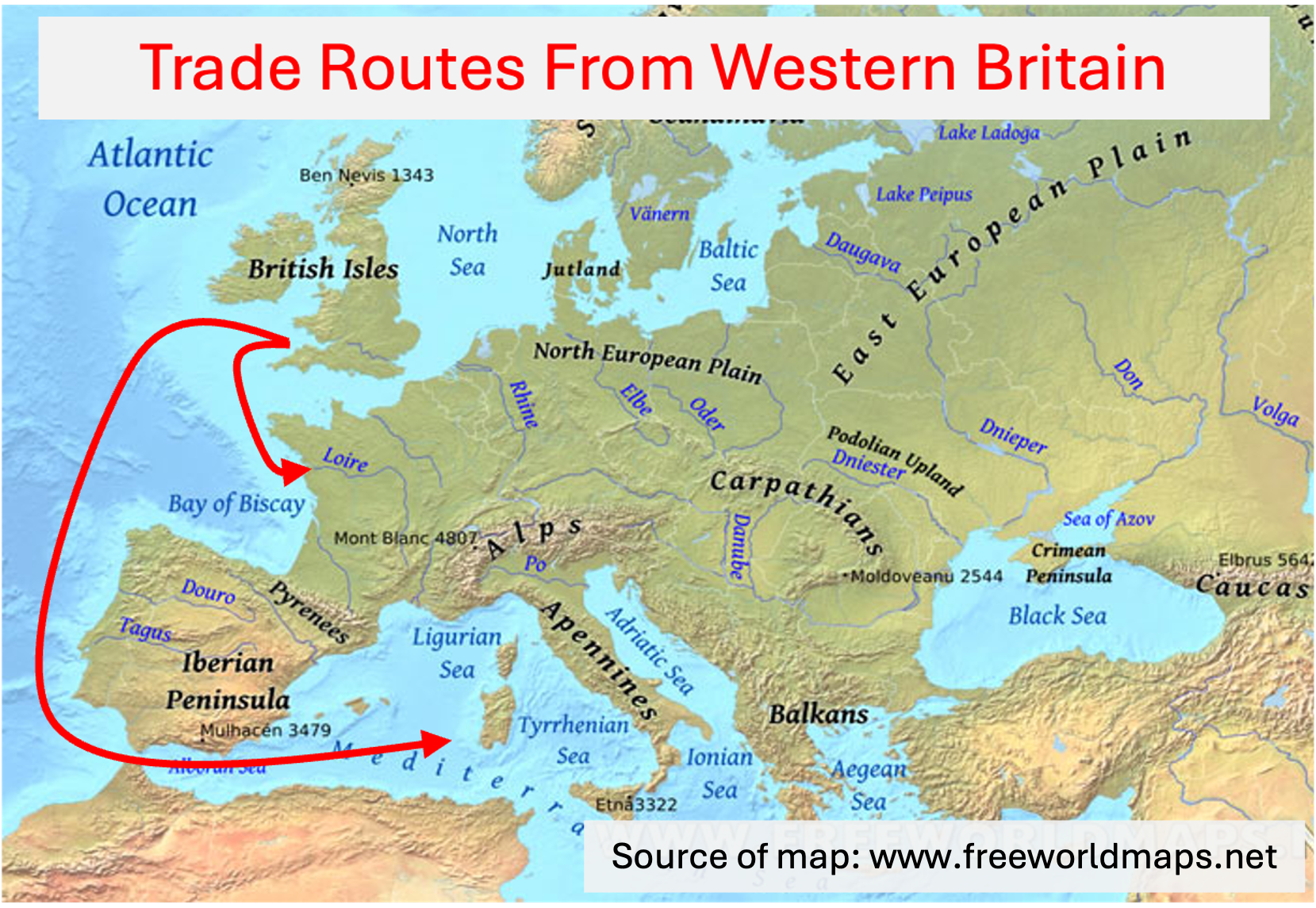
Section 1 — Arena: Western Britain and the Atlantic World
Atlantic Trade Networks; Maritime Capacity & Naval Reach; Navigation & Celestial Literacy; Metallurgy and the Sacred Craft of Transformation; Wales, Cornwall and Atlantic Orientation; Mediterranean Awareness; Political Structure & Early Authority.
Section 2 — Foundation: Language
Language as Foundation; The Problem of the “Celtic” Label; Welsh Verbs and Process Language; Coelbren, Menw, and Encoded Transmission; Pughe, Iolo, and Lexical Method.
Section 3 — Pillar I: Culture, Continuity, and Memory
Mabinogi and Narrative Continuity; Taliesin and Poetic Transmission; Druids, Bards, and Ovates; Identity and Cultural Survival; Cernyw and Celliwig; Wisdom; History, Legend, and Myth.
Section 4 — Pillar II: Law, Authority, and Social Order
Welsh Laws and Authority; Pwyll and Arawn: Legal Rank; Boundaries; Kingship.
Section 5 — Pillar III: Cosmos and Worldview
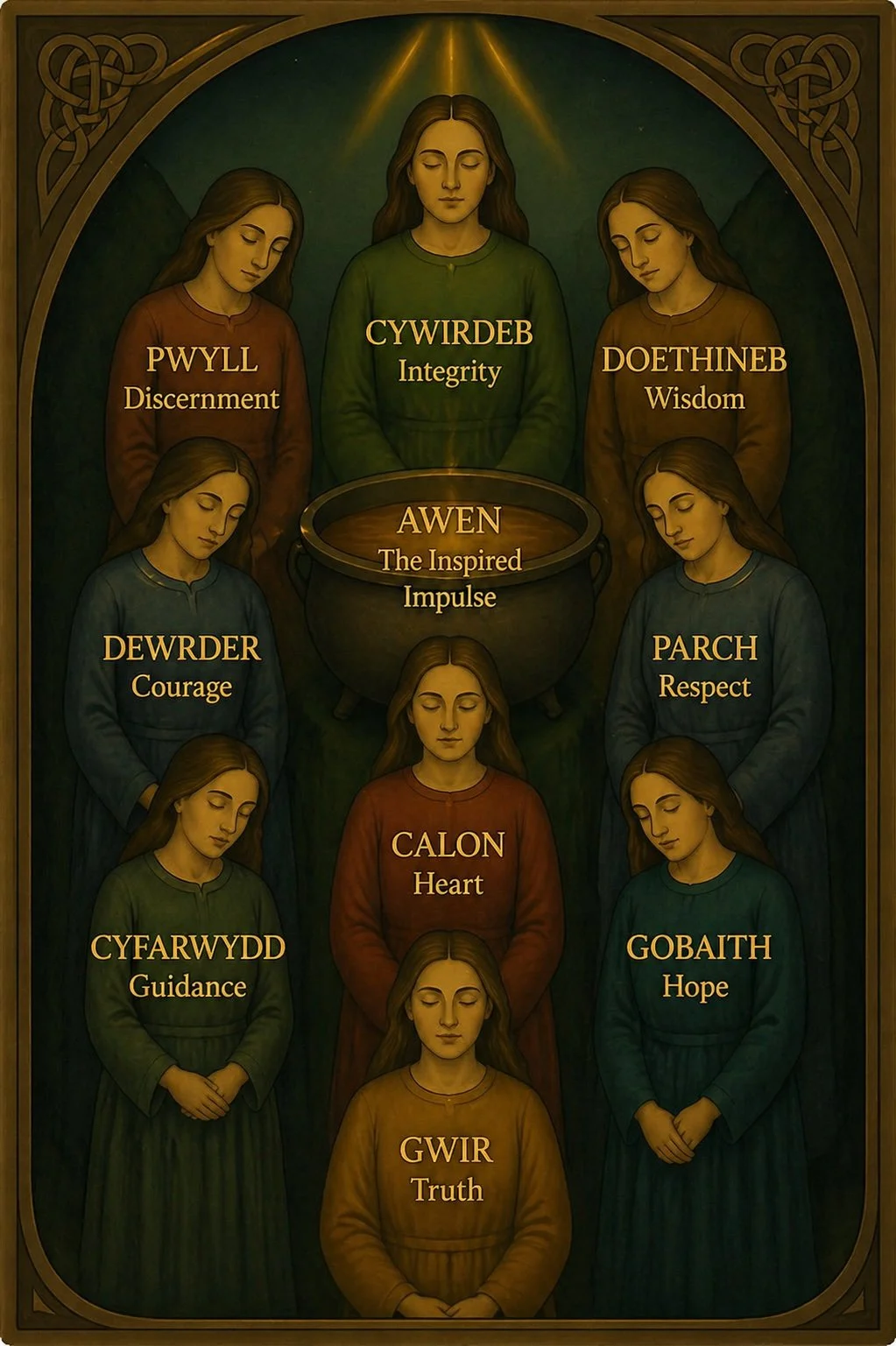
The Worlds of Being; Paths, Passages, and Turnings; The Measure of Space and Time; Thresholds, Horizons, and the Centre; Forces, Virtues, and Hidden Powers; Assigned Values of the Nine Maidens; The Human Powers of Right Ordering; Druids, Bards, and Keepers of Knowledge; Figures of Power and Memory.
Conclusion — The Old Language Continues
Appendix I — Lexical Atlas Sections
Index
The Central Argument
The central argument of Volume II is that the Welsh language preserves an older intellectual structure.
This structure is visible in the way words connect movement, nature, truth, law, inspiration, discernment, order, and memory. It is also visible in Welsh poetry, traditional triads, legal forms, mythological names, and astronomical imagery.
Rather than treating Welsh tradition as a collection of isolated tales or symbolic fragments, Volume II examines it as the expression of a deeply ordered culture.
From Language to Culture
A word is never merely a word. It belongs to a field of use.
When related Welsh words are examined together, they often reveal patterns of thought. These patterns suggest that language was used not only to describe the world, but to organize experience within it.
Volume II follows these patterns into larger themes:
The Atlantic setting of ancient Britain
The role of language in preserving memory
The continuity of Welsh cultural identity
The relationship between culture and law
The ordering power of poetry and transmission
The cosmological language of worlds, circles, paths, thresholds, and centres
The functions of Druids, Bards, andOvates
The Pillars
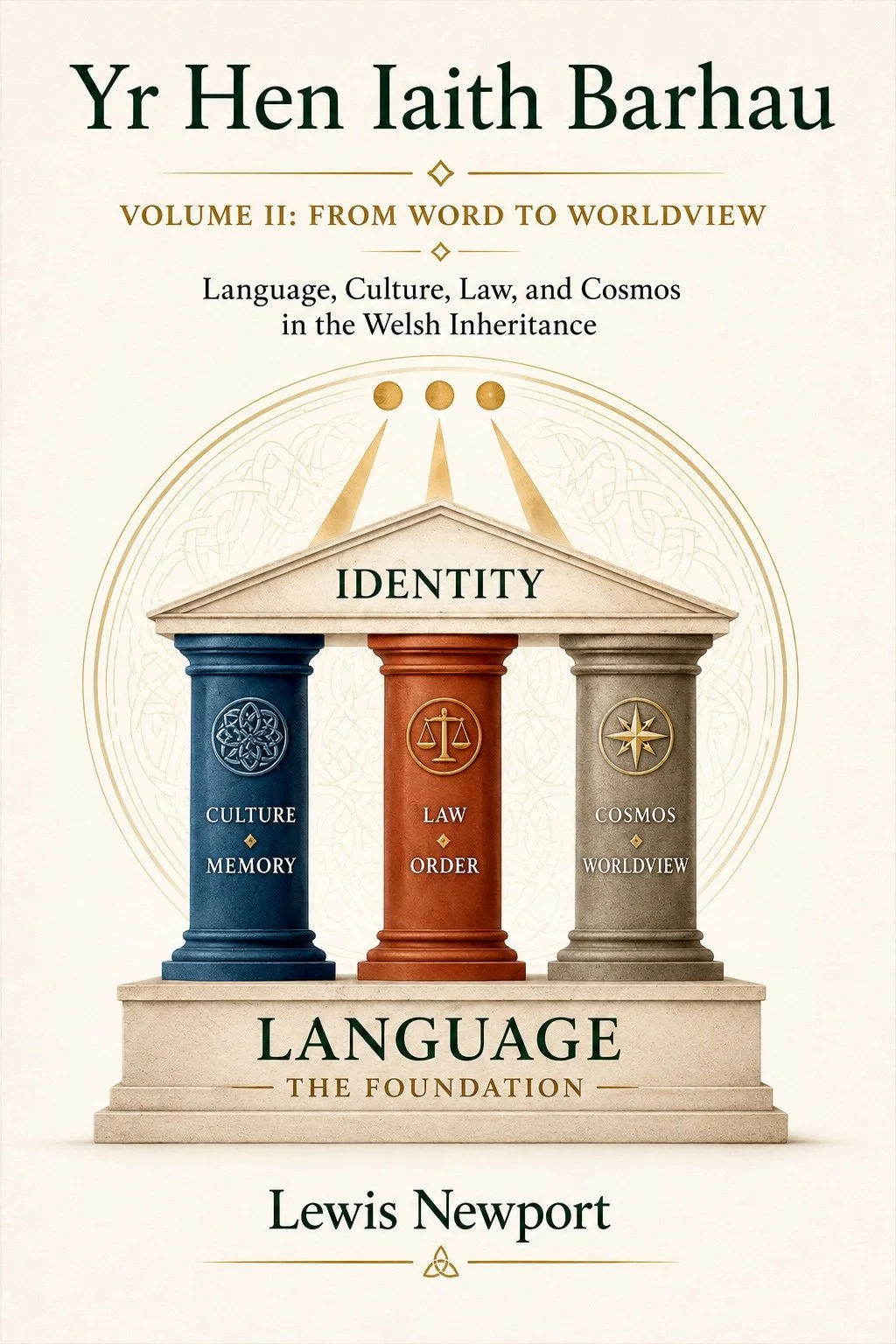
Volume II is structured around a foundation and three major pillars:
Foundation: Language
The foundation of interpretation. Welsh is examined as a language of process, relation, movement, and transformation.
Pillar I: Culture
The living field in which language becomes meaningful. Culture is treated as the prime mover of social order and continuity.
Pillar II: Law
The formal expression of cultural order. Welsh law is considered not merely as regulation, but as the practical shaping of a shared worldview.
Pillar III: Memory
The means by which knowledge survives. Bardic and Druidic traditions placed extraordinary value on memory, oral transmission, and disciplined preservation.
Welsh Cosmology
A major part of Volume II examines the cosmological vocabulary of Welsh tradition.
Terms such as Annwfn, Abred, Gwynfyd, Ceugant, Awen, Nwyfre, Anian, Hanfod, Pwyll, Doethineb, Gwir, and Cyfarwydd are not treated as decorative mystical language. They are examined as part of a structured vocabulary of being, movement, knowledge, order, and transformation.
This approach allows Welsh cosmology to be considered as an intellectual system, not merely as mythic imagery.
A Bridge to Wider Work
Volume II also forms a bridge to Lewis Newport’s other studies, including Taliesin’s Bardic Cosmology and later work on symbolic structures, elemental order, and the Tarot of the Mabinogi.
It provides the philosophical and linguistic foundation for understanding Welsh tradition as a coherent worldview with its own vocabulary, logic, and symbolic architecture.
Who This Volume Is For
This volume is written for serious general readers as well as researchers.
It is intended to be scholarly without being inaccessible. Readers do not need advanced academic training to follow the argument, but they should be willing to think carefully about language, history, poetry, and meaning.
It will be of interest to:
Readers of Welsh myth and legend
Students of Bardic and Druidic traditions
Researchers of cultural memory
Readers interested in ancient cosmology
Students of Taliesin and Welsh poetic tradition
Those seeking a deeper foundation for modern Druidic and Bardic thought
Volume II begins with words, but its subject is a world.
It asks readers to consider that the old Welsh language may preserve not only fragments of the past, but the grammar of an entire worldview.